

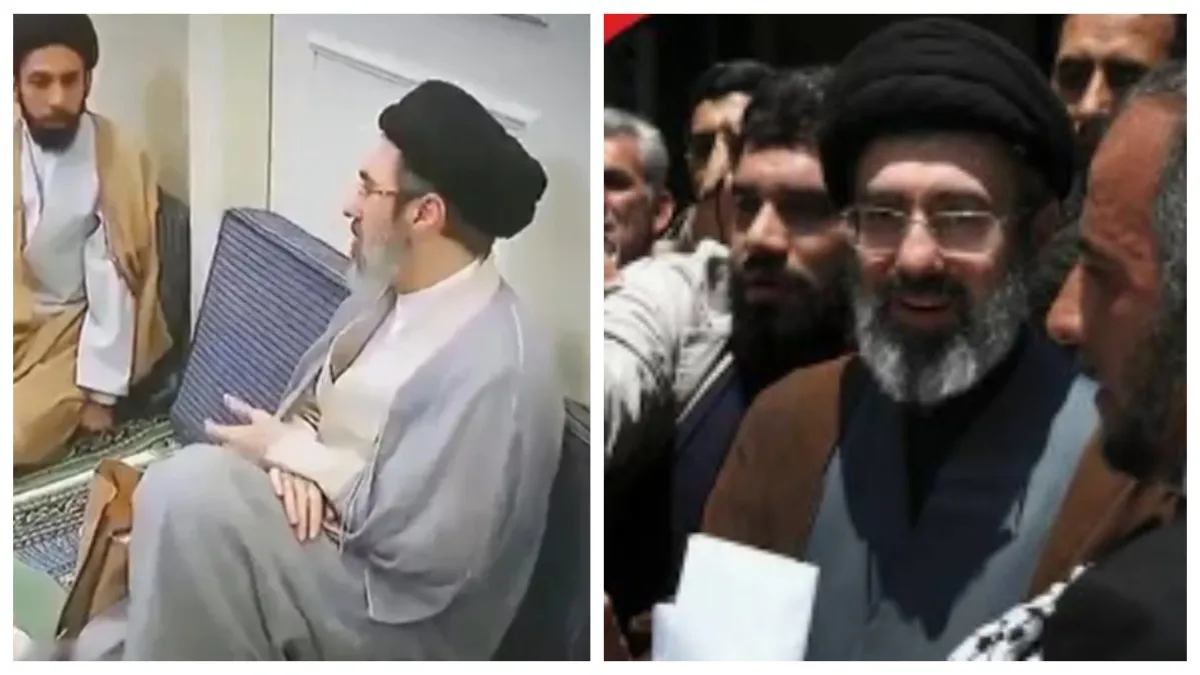

Iran’s Supreme Leader Mojtaba Khamenei Orders Major Military Reshuffle
Israeli media had claimed that Iran's Supreme Leader, Mojtaba Khamenei, was in critical condition and had been hospitalized, even suggesting that his death might be imminent. Now, Supreme Leader Mojtaba Khamenei has made a major announcement, ordering significant changes to the country's military leadership. Under this directive, six senior commanders have been appointed to key positions within the Islamic Revolutionary Guard Corps (IRGC), the regular armed forces, and the Basij militia.
**Changes made by Mojtaba**
Among the most significant appointments in Iran, Major General Ahmad Vahidi has been named Commander-in-Chief of the IRGC, the country's most powerful military and security organization. Vahidi is a veteran member of the Revolutionary Guards and previously commanded the Quds Force, the IRGC's foreign operations arm. His promotion is particularly significant given his growing influence over Iran's wartime security and strategic decision-making.
Major General Ali Abdollahi has been appointed Chief of Staff of the Iranian Armed Forces. Abdollahi previously headed the Khatam al-Anbiya Central Headquarters—the command structure responsible for coordinating operations between Iran's various military branches, including the IRGC and the regular army.
Changes have also been made at the operational level; Rear Admiral Ali Azmayi has been appointed Commander of the IRGC Navy.
Hossein Taeb, a powerful intelligence and security official with long-standing ties to the Revolutionary Guards, has been appointed head of the Basij Organization.
Kioumars Heydari and Mostafa Izadi have also been assigned senior deputy roles within the command hierarchies of the army and the IRGC. Iran's Supreme Leader to Gain More Power
This reshuffle of Iran's military leadership is not merely a routine change of personnel. It signals an effort by the new supreme leadership to consolidate command and appoint seasoned hardline commanders to positions that could prove critical in any future tense situation.
The IRGC has already emerged as an influential force in Iran's strategic decision-making process. Earlier this year, assessments revealed that Vahidi and his close commanders had gained significant influence over Iran's military response and even its approach to negotiations—particularly during the tensions surrounding the Strait of Hormuz.
You Might Also Like
-
Israeli media had claimed that Iran's Supreme Leader, Mojtaba Khamenei, was in critical condition an...
-
Trump claims US blockade is as strong as a ‘wall of steel’ Demand for compensation for US families...
Leave A Comment






Comments