

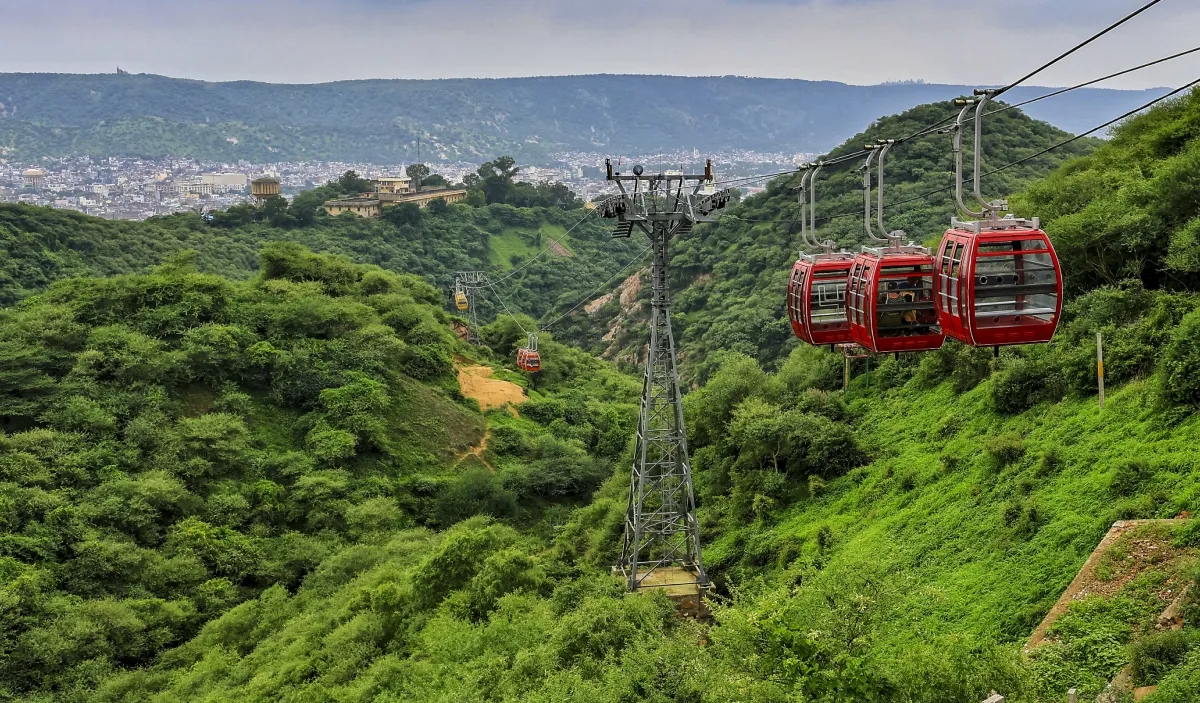

SC stays order on heights below 100 metres
The Supreme Court has stayed the order that declared hills in the Aravalli range with an altitude of less than 100 meters as not part of the Aravalli mountains. The country's highest court took suo motu cognizance of the matter. During the hearing, Solicitor General Tushar Mehta, representing the government, stated that misinformation was being spread in this case. The Supreme Court responded that several things needed to be clarified, which is why the matter was taken up. The court constituted a committee to examine the Aravalli hill range and set January 21st as the date for the next hearing.
The Chief Justice of India (CJI) said that some technical points needed clarification. He stated, "A high-powered committee, comprising domain experts, will examine the Aravalli Hills and range over a period of time to protect the structural and ecological integrity of the hill range." The Supreme Court directed that the committee's recommendations and subsequent Supreme Court findings would be kept in abeyance until further notice.
Order to form a new inquiry committee
The Supreme Court has stayed its November 20th order accepting the Central Environment Ministry's definition of the Aravalli Hills and Aravalli range. In November, the Supreme Court had accepted that hills with an altitude of less than 100 meters should not be considered part of the Aravallis. Accepting this definition raised concerns that large parts of the Aravalli region could be opened up for unregulated mining activities. A bench headed by Chief Justice of India Surya Kant also ordered the formation of a new expert committee to examine the issues that need to be investigated regarding the definition of the Aravallis.
Notice issued to the Centre and four states
The court also issued notices to the Centre and the four Aravalli states (Rajasthan, Gujarat, Delhi, and Haryana), seeking their responses on the issue. The Aravalli mountain range is located in these four states. One end of the mountain range is in Gujarat and the other in Delhi. A major portion of it is in Rajasthan, and a significant part is also in Haryana. The Aravalli mountains are not as tall as the Himalayas, but they are home to a wide variety of wildlife and trees. These animals and plants could be threatened if mining begins in the area.
You Might Also Like
-
New Delhi: This serves as a prime example of how time itself often provides the answers to certai...
-
It is well known that Bangladesh, Sri Lanka, and the Maldives have, in the past, spoken out again...

Leave A Comment









Comments