

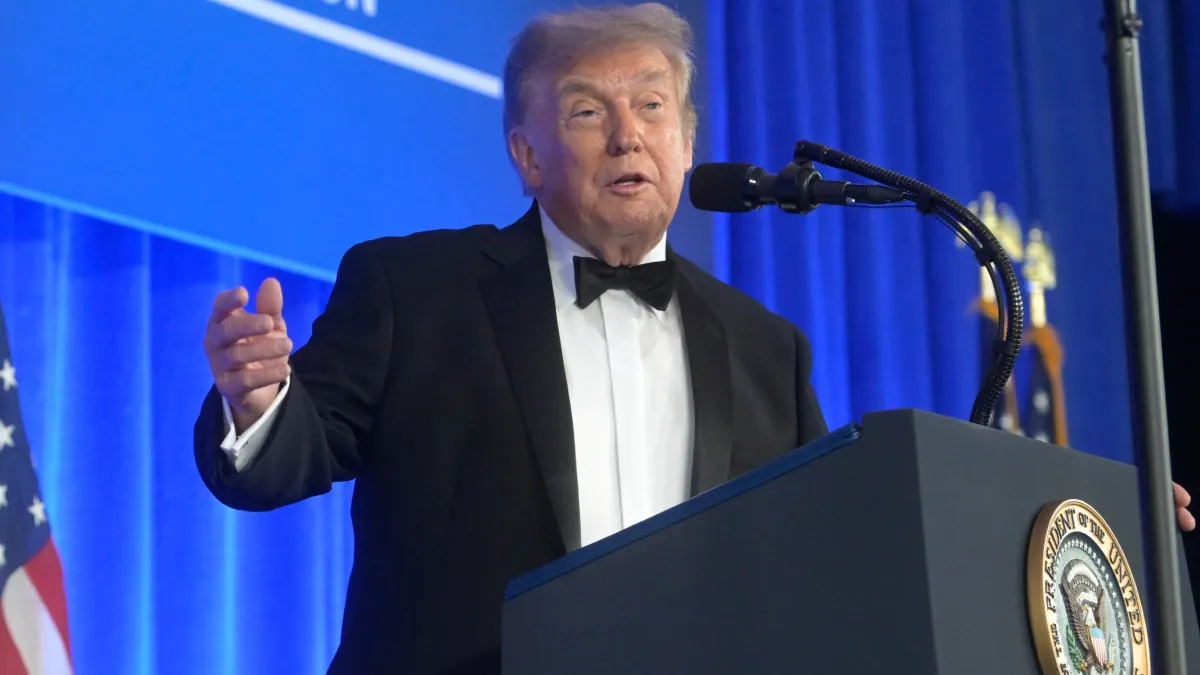

US-Iran Talks Could Shift From Nuclear Deal to Strait of Hormuz
To end the ongoing military standoff with Iran, US President Donald Trump may now prioritize the reopening of the Strait of Hormuz over the nuclear deal. According to a report by *The Wall Street Journal*, Trump has signaled to close aides that if Iran fully restores maritime traffic in the Strait of Hormuz, the US could explore ways to end the conflict without a nuclear agreement.
However, Iran has laid down conditions for reopening the Strait that make reaching an agreement appear difficult. Tehran has demanded billions of dollars in payments from the US, the lifting of the naval blockade, the withdrawal of US troops from the region, and other concessions.
**Trump's 'Exit Plan' via Hormuz**
The Strait of Hormuz is one of the world's most critical oil transit routes. Maritime traffic there has been disrupted due to the threat of missile and drone attacks by Iran, leading to increased volatility in the global oil market.
In recent weeks, President Trump has repeatedly claimed that the Strait is fully open, but Iran's stance has differed. Tehran has objected to the movement of US warships and vessels belonging to its allies. Iran has also proposed charging commercial ships a fee for using the route—a proposal the US has rejected.
**Iran's Long List of Demands**
Mohammad Bagher Zolghadr, Secretary of Iran's Supreme National Security Council, outlined several conditions for reopening the Strait. These include a permanent end to hostilities by the US, the lifting of the naval blockade, the withdrawal of US troops from the region, the removal of sanctions imposed on Iran, and the release of Iran's frozen assets.
Additionally, Iran has demanded war reparations. Tehran wants the US to cease threats and hostile rhetoric against Iran and halt US military action against Iranian-backed militia groups in the region. Domestic Politics: A Major Challenge for Trump
According to reports, Trump is facing mounting domestic pressure to bring the conflict to a swift conclusion. With less than three months remaining until the US midterm elections, petrol prices have remained significantly higher than before the war began. Consequently, Trump faces the challenge of ending the conflict in a manner that allows him to present it as a personal achievement back home. Restoring the flow of shipping through the Strait of Hormuz could provide just such a political platform.
Why Might the Nuclear Issue Take a Backseat?
Iran's nuclear program has long been the primary source of tension between the US and Iran. The Trump administration has consistently maintained that Iran will not be permitted to acquire nuclear weapons. However, according to the *Wall Street Journal* (WSJ), Trump has recently told officials that if the US were to damage Iran's key nuclear facilities, it would be difficult for Tehran to restart its nuclear program.
Trump believes that US intelligence agencies can detect any new nuclear activity by Iran and that the threat of military action—if necessary—could deter Iran from attempting to build nuclear weapons again. Driven by this reasoning, the Trump administration might prioritize restoring maritime traffic in the Strait of Hormuz over immediately securing a nuclear deal.
Iran's Economic Demands Could Be the Biggest Hurdle
Iran's economic demands could prove to be one of the most difficult aspects of any potential agreement. Tehran is seeking billions of dollars in war reparations and the release of its assets frozen abroad. Trump has already stated that US taxpayer money will not be given to Iran. However, US officials acknowledge that reaching an agreement might require considering the conditional release of some of Iran's frozen assets. Additionally, the issues of allowing Iran to sell oil on the international market and granting sanctions relief will be crucial.
Will the Conflict End Without a Nuclear Deal? If Iran agrees to fully restore the movement of commercial and military vessels in the Strait of Hormuz, a path could open for Trump to end the conflict even without a nuclear deal. However, Iran's current demands indicate that Tehran seeks to secure US concessions solely in exchange for opening the strait. Consequently, the focus of negotiations in the coming days could shift from the nuclear program to the Strait of Hormuz, sanctions, the US military presence, and economic compensation.
You Might Also Like
-
Russia Forms New Brigade of Former Ukrainian Soldiers A report highlights another strategy employed...
-
'Mosquito nets' strung over Kharkiv's streets Images emerging from Kharkiv reveal a different side...

Leave A Comment




Comments